Baler twine is one of the leading materials for farming and agricultural use. Discover how baler twine can benefit your livestock and improve your farming business.
Additional Info/Body:
In today’s agricultural industry, baler twine is crucial for farmers. It provides a way to store and organize livestock feed while also giving more space for grazing and movement of the animals in the field. Today, baler twine can be used to pack cattle feed bales as well as an alternative wire fencing material that keeps animals sheltered and separated.
At our baling company, we produce high-quality baler twines for any animal farmer’s needs! But before you go shopping for a baler twine, it’s essential to be as informed and educated about the material. Continue reading to know more about this product.
Raw Material for Baler Twines
A common benefit that you can get from baler twines is that it is made of high-quality raw materials. In fact, baler twines are usually made of natural fibres known for their strength and durability. Aside from that, baler twine is also resistant to moisture, which means it will not rot even when it gets wet.
Properties of a Baler Twine
What properties should a quality baler twine have? Aside from the raw materials it is made of; baler twine also has the following properties:
Strength and durability to withstand any premature wear and tear.
Moisture-resistance to prevent premature rotting during moist conditions.
Flexible enough to form into a bale.
Easy to cut for hassle-free removal from the bale.
Types of Baler Twine
At our baling company, we produce three types of baler twines: natural fibre baler twine, synthetic baler twine, and biodegradable baler twine.
Natural Fiber baler twines are made of high quality, durable natural fibres like hemp and cotton.
Synthetic baler twines offer the same benefits as natural fibre baler twines, but they contain synthetic materials that make them more water-resistant than other types.
Biodegradable baler twines are also made of high-quality fibres, but they contain baler twine additives that make them decompose easily when left out in the environment.
They can be used for packaging, and it is safe to use baler twine as animal feed because there’s no risk of contamination from baler twine additives.
The Strength of Baler Twines
Aside from being made from high-quality raw materials, baler twines are also known for their strength. Baler twines can support a certain weight depending on the baling that you need to do.
For instance, balers use baler ties with a tensile strength between 150 and 300 pounds per inch to secure large bales. You can also use a baler twine for a wide variety of purposes. Aside from baling, baler twine can also be used as a:
Fence Material
Tying Material
Cordage Material
Rope Material
Sell More Bales with Baler Twine
Aside from providing a way to store livestock feed, baling also increases the number of bales per acre and available storage space over time. This will allow you to sell more bales or better use your baler twine in baling and storing.
Contact our baling company today for more information on our balers and baling accessories! We can help you sell more bales in your business with the right balers that will benefit your livestock farm. We also produce high-quality baler twines for any animal farmer’s needs! Contact us today for more information on our baler twines and other farming and agricultural products.
While playing Chanel Simmons wasn’t the 3LW singer’s acting debut—that would be a 2001 episode of the Nickelodeon series Taina—it was the breakthrough role that led to appearances in feature films (Coach Carter, I’m in Love with a Church Girl), TV films (Lovestruck: The Musical) and two more Cheetah Girls films.
After a relationship with Rob Kardashian from 2007 to 2009 led to a handful of appearances on Keeping Up with the Kardashians, Adrienne went down the reality TV path, starring in 2012’s Empire Girls and hosting the short-lived 2014 competition series Nail’d It. In 2013, she began her current job as co-host of The Real. She also competed in the second season of The Masked Singer in 2019, placing third as the Flamingo and is set to appear on the fifth season of Raven’s Home.
After 3LW disbanded in 2007 and The Cheetah Girls parted ways in 2008, Adrienne took her time working on a solo album, eventually releasing New Tradiciones in 2017. After dating Rob, she was briefly engaged to boyfriend of six years, Roc Nation executive Lenny Santiago, in 2015. Nearly a year after calling that off, she and musician Israel Houghton announced their engagement. They were married in November 2016.
An exterior view of China Evergrande Centre in Hong Kong, China March 26, 2018.
Bobby Yip | Reuters
BEIJING — Indebted property developer China Evergrande defaulted this week with hardly a ripple in markets as most institutions remained silent.
Late Thursday, Fitch Ratings said Evergrande had not confirmed payment of its latest debt obligation, triggering a default. The developer’s shares traded 1% lower Friday. The Shanghai composite dropped 0.2%.
“We should have been calling this a technical default for a long time already, but nobody dared,” Alicia Garcia-Herrero, Natixis’ chief economist for Asia-Pacific, said Friday.
“China is not making it clear because there’s no pressure to make it clear,” she said. “Ratings [agencies] should be pushing. Some investors did push. Nobody wants to label this because they don’t want to bear the consequences. Everybody’s trying to increase what they can get out of it.”
Not putting the official “default” label on Evergrande allows the company to restructure its debt at a lower cost, she said.
S&P Global Ratings did not have a statement as of Friday afternoon, and referred CNBC to its report Tuesday that said “default looks inevitable for Evergrande.” Moody’s, another ratings agency, did not respond to a request for comment.
Evergrande did not respond to a CNBC request for comment.
Fitch’s proclamation of default is based on the firm’s assumption that two interest payments were not paid before the grace period ended Monday, the ratings agency said. It downgraded Evergrande’s rating to “restricted default,” which means the developer has not yet ceased operations, or even begun formal procedures such as filing for bankruptcy.
No other mentions of ‘default’
The overall silence around Evergrande’s default comes as Chinese authorities have made public statements in the last week about efforts to manage the developer’s situation.
On Dec. 3, Hong Kong-listed Evergrande warned in a filing it could not guarantee it could meet its financial obligations and planned to “actively engage with offshore creditors” about debt restructuring. The company said it received a demand from creditors to pay about $260 million.
Later that day, the local government in Guangdong province, where the developer is headquartered, said it met with Evergrande founder Xu Jiayin. The province added it sent a working group to the company for supervising risk management.
“Our view on the Evergrande situation is that ultimately, that’s an extremely healthy development, because there needs to be a … [worked-out] precedent for companies to restructure their liabilities for it to be a truly functioning credit market,” Jason Brady, president and CEO of Thornburg Investment Management, said on a media call Wednesday.
Read more about China from CNBC Pro
Real estate is closely watched since it and related industries account for about a quarter of China’s economy, according to Moody’s.
What’s more important for China’s economy is Evergrande’s ability to complete apartments that it’s already sold to consumers, Natixis’ Garcia-Herrero said. She expects that with Beijing’s help, there will be a long, drawn-out impact on growth rather than a sharp shock from property developers’ problems.
On the side of financial markets, she said spillover is limited because Evergrande’s debt is mostly held by “high net worth individuals, [who] are holding Evergrande to the maturity, to the restructuring point.”
Reps. Liz Cheney and Bennie Thompson, vice chair and chair of the select committee.
In the news today: The select committee investigating the Jan. 6 attack on the U.S. Capitol subpoenaed phone records for more than 100 people, even as key potential witnesses are refusing to talk. Elsewhere in government, Republicans continue their quest to make the United States a worse place, holding up important legislation and forcing Congress into some really stupid contortions to get the basics done.
This article was previously published September 28, 2020, and has been updated with new information.
Evidence showing vitamin D lowers your risk of SARS-CoV-2 infection, hospitalization, severe complications and death continues to mount. A September 17, 2020, paper1 in PLOS ONE found people with lower vitamin D levels in their blood had a significantly higher risk of testing positive for SARS-CoV-2.
Higher Vitamin D Lowers Risk of Positive SARS-CoV-2 Test
The lead researcher in this study was Dr. Michael Hollick, who is widely recognized as one of the leading vitamin D experts in the world. I have interviewed him twice in the past. He and his team used retrospective observational analysis of SARS-CoV-2 tests to determine whether vitamin D blood levels impacted positivity rates.
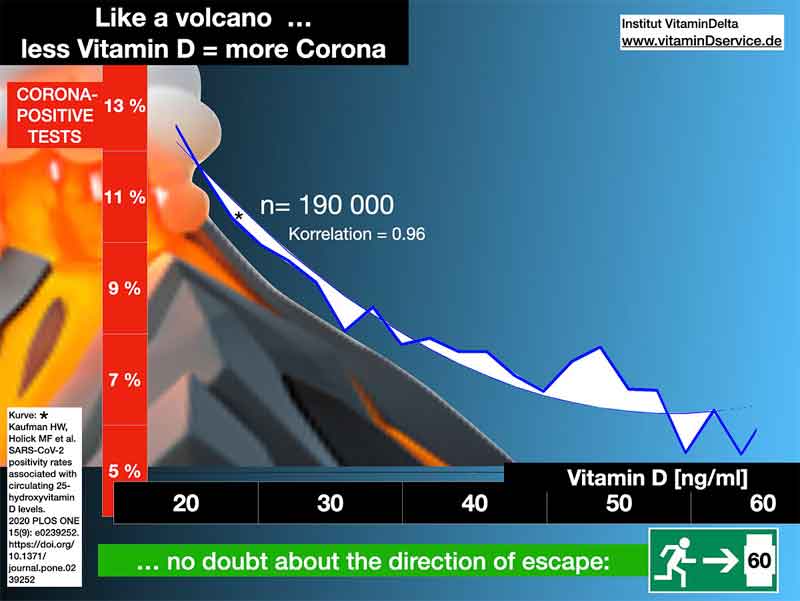
Based on vitamin D results from the preceding 12 months and SARS-CoV-2 test data from mid-March through mid-June 2020 from 191,779 patients from 50 U.S. states, people with a vitamin D level of at least 55 ng/mL (138 nmol/L) had a 47% lower SARS-CoV-2 positivity rate compared to those with a level below 20 ng/mL (50 nmol/L).2 As noted by the authors:
“The SARS-CoV-2 positivity rate was 9.3% and the mean seasonally adjusted 25(OH)D was 31.7 [ng/mL]. The SARS-CoV-2 positivity rate was higher in the 39,190 patients with ‘deficient’ 25(OH)D values (<20 ng/mL) (12.5% …) than in the 27,870 patients with ‘adequate’ values (30–34 ng/mL) (8.1% …) and the 12,321 patients with values ≥55 ng/mL (5.9% …) …3
The risk of SARS-CoV-2 positivity continued to decline until the serum levels reached 55 ng/mL. This finding is not surprising, given the established inverse relationship between risk of respiratory viral pathogens, including influenza, and 25(OH)D levels.4
SARS-CoV-2 positivity is strongly and inversely associated with circulating 25(OH)D levels, a relationship that persists across latitudes, races/ethnicities, both sexes, and age ranges. Our findings provide impetus to explore the role of vitamin D supplementation in reducing the risk for SARS-CoV-2 infection and COVID-19 disease.”5
The graph below, obtained from GrassrootsHealth,6 shows how the rate of positive SARS-CoV-2 results declines as vitamin D levels go up. Again, as you increase your vitamin D level from 20 ng/mL to 55 ng/mL, your risk of having a positive SARS-CoV-2 test result decreases by 47%.
Even after adjustment for gender, age, ethnicity and latitude, the risk of having a positive test result was 43% lower among those with a vitamin D level of 55 ng/mL compared to those with a level of 20 ng/mL. I understand that the COVID-19 test may be worthless and counterproductive with its false positives, but it is the only metric we currently have to assess interventions.
Vitamin D Lowers Infection and Hospitalization Rates
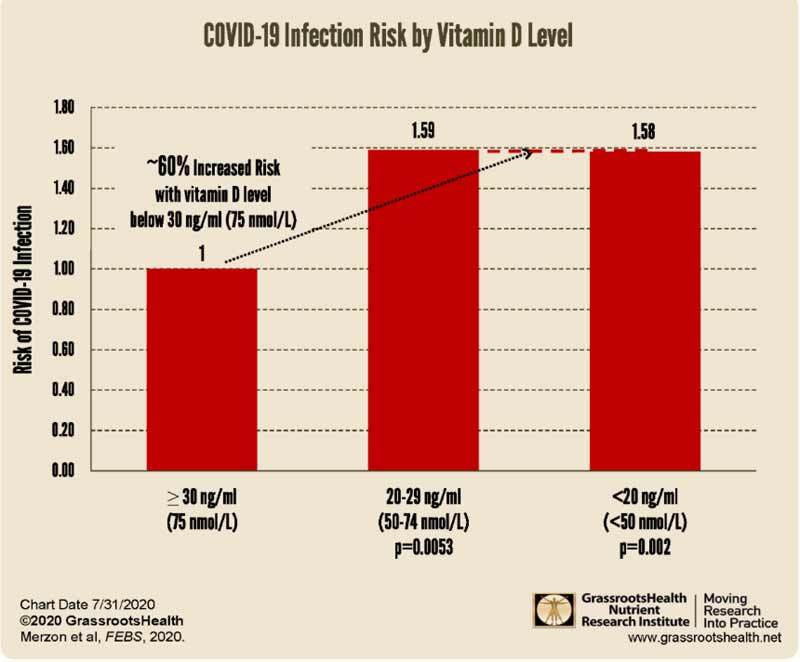
That higher vitamin D levels lower the risk of SARS-CoV-2 infection (i.e., getting a positive test result) was also confirmed in an Israeli population-based study7,8 published in July 2020. This paper examined data from 7,807people tested for SARS-CoV-2 infection between February 1 and April 30 of 2020 who also had vitamin D test data available.
Here, those with a vitamin D level above 30 ng/mL (75 nmol/L) had a 59% lower risk of testing positive for SARS-CoV-2 compared to those with a vitamin D level between 20 ng/mL and 29 ng/mL (50 to 74 nmol/L), and a 58% lower risk compared to those with a vitamin D level below 20 ng/mL (50 nmol/L). The graph below, from a GrassrootsHealth report,9 illustrates the findings.
Vitamin D Lowers Hospital and ICU Admissions
Seeing how higher vitamin D levels lowers your risk of testing positive for SARS-CoV-2 in the first place, it’s no surprise then that other data show higher vitamin D also lowers hospital and intensive care admissions.
The Israeli analysis10 above, for example, found that among individuals who tested positive for SARS-CoV-2 infection, those who had a vitamin D level below 30 ng/mL also had a 1.95 times (crude odds ratio) to 2.09 times (odds ratio after adjustment for demographics and psychiatric and somatic disorders) higher risk of being hospitalized for COVID-19.
In other words, having a vitamin D level below 30 ng/mL about doubled the risk of being hospitalized with COVID-19. Vitamin D, when administered to hospitalized patients, can also lower their risk of needing intensive care.
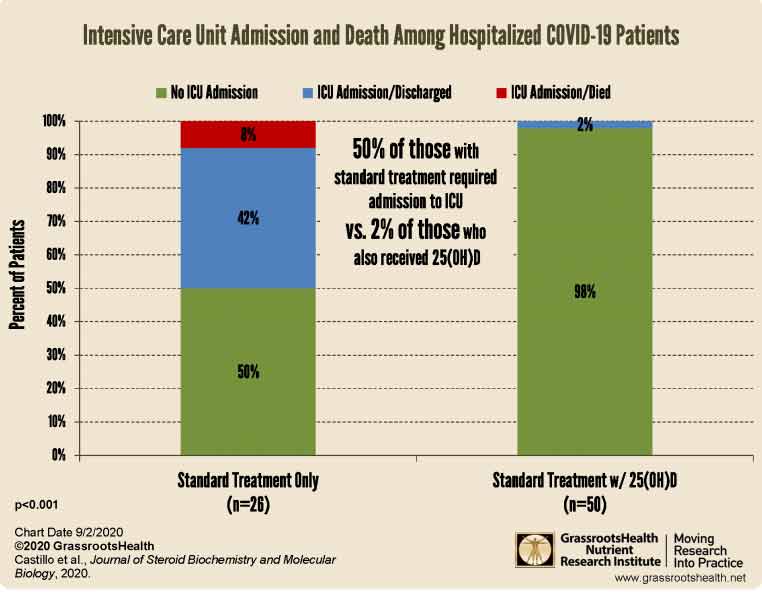
This was demonstrated by Spanish researchers in a small randomized clinical study11,12,13,14 published online August 29, 2020. They found hospitalized COVID-19 patients who were given supplemental calcifediol (a vitamin D3 analog also known as 25-hydroxycholecalciferol or 25-hydroxyvitamin D) in addition to standard of care — which included the use of hydroxychloroquine and azithromycin — had significantly lower intensive care unit admissions.
Patients in the vitamin D arm received 532 micrograms of calcifediol on the day of admission (equivalent to 106,400 IUs of vitamin D15) followed by 266 mcg on Days 3 and 7 (equivalent to 53,200 IUs16). After that, they received 266 mcg once a week until discharge, ICU admission or death.
Of those receiving calcifediol, only 2% required ICU admission, compared to 50% of those who did not get calcifediol. None of those given vitamin D supplementation died, whereas 7.6% in the standard care group perished.
Vitamin D Lowers COVID-19 Mortality
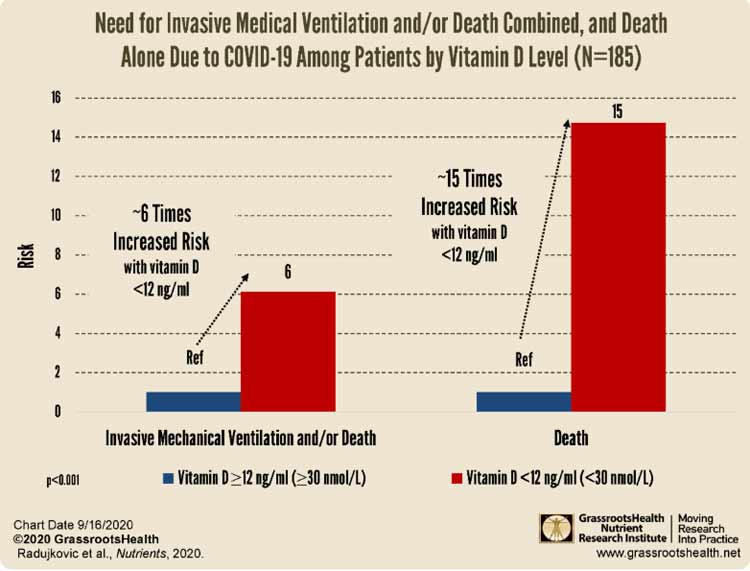
Other studies have also confirmed that higher vitamin D levels lower your risk of complications and death from COVID-19. Among them is an August 2020 study17,18 published in the journal Nutrients, which found patients who had a vitamin D level below 12 ng/mL (30 nmol/L) had a 6.12 times higher risk of severe disease requiring invasive mechanical ventilation, and a 14.7 times higher risk of death compared to those with a vitamin D level above 12 ng/mL.
An Iranian study19,20 published online in mid-July 2020 also found that patients with vitamin D levels above 30 ng/mL (75 nmol/L) had better clinical outcomes and a far lower risk of death. Among COVID-19 patients over the age of 40 who had vitamin D levels below 30 ng/mL, 20% died, compared to 9.7% of those with levels at or above 30 ng/mL. Among those with a vitamin D level of at least 40 ng/mL, only 6.3% died.
Low Vitamin D Is a Risk Factor for Respiratory Failure
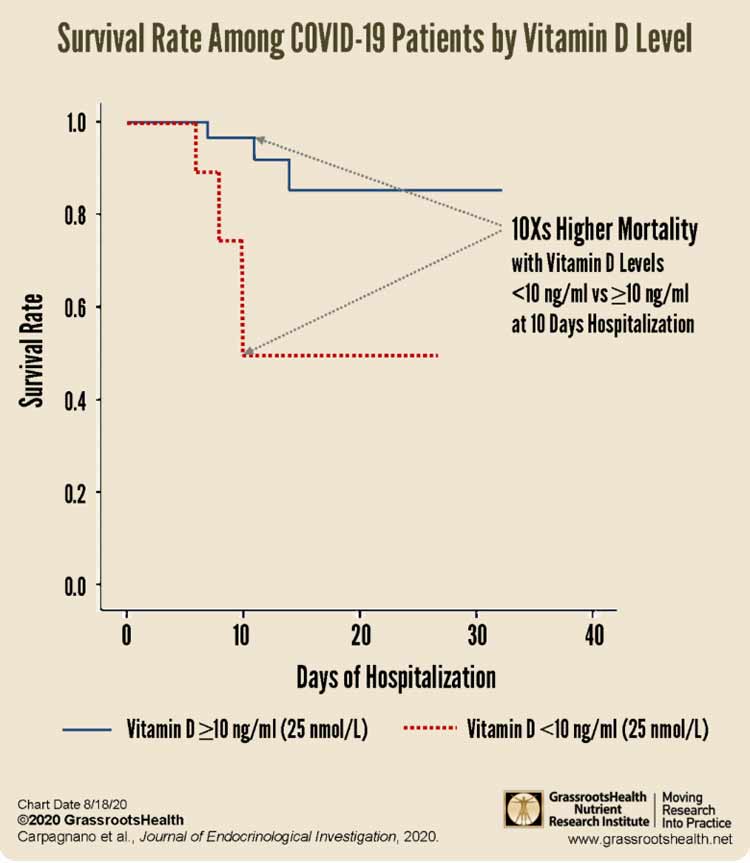
Yet another study, published in the Journal of Endocrinological Investigation in August 2020, found vitamin D deficiency was a common factor among hospitalized patients in Italy who had been diagnosed with COVID-19 related respiratory failure.
As reported by GrassrootsHealth:21
“Vitamin D levels were measured for each patient and were defined as insufficient (20-29 ng/ml or 50-74 nmol/L), moderately deficient (10-19 ng/ml (25-49 nmol/L), and severely deficient (<10 ng/ml or <25 nmol/L). A normal vitamin D level was defined as 30 ng/ml (75 nmol/L) or higher.
81% of the patients with acute respiratory failure due to COVID-19 had vitamin D levels below 30 ng/ml (75 nmol/L); and 24% had severe vitamin D deficiency (≤10 ng/ml or ≤25 nmol/L).
When looking at mortality rates after 10 days of hospitalization, it was found that those with severe vitamin D deficiency had a 50% probability of death, compared to 5% among those with a vitamin D level greater than 10 ng/ml (25 nmol/L).
This is a 10 times higher risk of death among patients with severe vitamin D deficiency compared to patients with vitamin D levels >10 ng/ml (>25 nmol/L) at 10 days of hospitalization.”
According to the study authors:
“Altogether, these considerations support the recommendation that people at risk of influenza and/or COVID-19 consider vitamin D supplementation to raise their 25(OH)D concentrations above 40-60 ng/mL, and that treatment of patients infected with influenza and/or COVID-19 includes higher vitamin D doses.”
How and Why Vitamin D Lowers COVID-19 Risks
In a past article, I reviewed how vitamin D lowers your risk of COVID-19 complications and death by inhibiting both cytokine22 and bradykinin storms.23 Vitamin D also:
Lowers viral replication24
Boosts your overall immune function by modulating both innate and adaptive immune responses
Reduces respiratory distress25
Improves overall lung function
Helps produce surfactants in your lungs that aid in fluid clearance26
Lowers your risk of comorbidities associated with poor COVID-19 prognosis, including obesity,27 Type 2 diabetes,28 high blood pressure29 and heart disease30
All of these factors make it an important component of COVID-19 prevention and treatment. As temperatures and humidity levels drop — two factors that influence the viability of SARS-CoV-2 in air and on surfaces — it’s quite likely we’ll see a reemergence as we move into fall and winter.
My #StopCOVIDCold campaign seeks to raise awareness about the importance of vitamin D optimization to prevent a resurgence of COVID-19 hospitalizations and deaths. The two reports, which you can download free of charge on the #StopCOVIDCold website, provide in-depth information about the biological mechanics behind vitamin D’s protective effects.
When the northern hemisphere heads into autumn, is the ideal time to check your vitamin D level and start taking action to raise it if you’re below 40 ng/mL (100 nmol/L). Experts recommend a vitamin D level between 40 and 60 ng/ml (100 to 150 nmol/L). An easy and cost-effective way of measuring your vitamin D level is to order GrassrootsHealth’s vitamin D testing kit.
Once you know your current vitamin D level, use the GrassrootsHealth vitamin D calculator31 to determine how much vitamin D you might need to reach your target level. To optimize vitamin D absorption and utilization, be sure to take your vitamin D with vitamin K2 and magnesium. The three work synergistically to manage calcium metabolism.32
Lastly, remember to retest in three to four months to make sure you’ve reached your target level. If you have, then you know you’re taking the correct dosage. If you’re still low (or have reached a level above 80 ng/mL), you’ll need to adjust your dosage accordingly and retest again in another three to four months.
Solar Panels have a lot of advantages over traditional methods of powering your home. You may be asking yourself, “Why should I use them? Why aren’t there other energy sources that are more cost-efficient?” The short answer is simple: solar panels are here to stay. They’re here to stay for the future, and unlike so many other energy sources (like wind and water) are here to stay for the long term.
The big question now is: what are the benefits and negatives of solar panels? And the answer is everything! First, they can provide homeowners electricity for free if used properly; but both upsides and downsides exist. So, let’s jump right in and see exactly the pros and cons (pros and cons) of solar panels in general.
The biggest advantage to solar panels Adelaide is that they produce renewable energy constantly replenished by sunlight. When used this way, solar panels can significantly reduce your household’s dependency on traditional electricity sources, like the electric company and your local power grid. You can even generate enough electricity for your personal use. It is a major advantage, especially since most people will never actually need all the excess electricity generated by these systems. In addition, they can easily power your entire house, just from the sun’s energy, so you never need to worry about running out of power during those months when you don’t get any sunlight.
Another major advantage is that they can eliminate your need for fuel sources for electricity generation. It includes your use of coal (for electricity generation) or natural gas (as a source of fuel for your heating system). These fuels are significantly more expensive than the sun’s energy, making them extremely expensive to use. When installing solar panels on your home’s roof, you essentially “free yourself” from their high-cost maintenance. As long as you properly maintain and install these systems, you’ll be able to save thousands of dollars over the life of your system, depending on how much excess energy you generate from solar panels as well.
So, what’s the downside? Well, there are a few minor things you need to be aware of before getting solar panels installed on your roof. For one thing, you absolutely must have unobstructed space on your roof for the panels. In addition, if you have any sloped or not level land, you will greatly increase the amount of time it takes your solar panels to produce energy, as well as reduce the overall efficiency of your system. Finally, you also need to be prepared to deal with the concentrated power of the sun, as this can pose serious problems if you don’t have the proper precautions for handling it.
Another thing you need to be prepared for has a properly functioning electrical system from solar panels Adelaide. During certain parts of the year when the sun is at its peak, as the times of spring and summer, solar power can be very efficient, as long as you’re using it at that time. However, during these periods, the demand for electrical power is so great that your electric company may raise your electric bill by several thousand dollars. It isn’t necessarily a bad thing, but you need to be prepared for the increased cost of your power during these times. The best thing you can do during these times is make sure you have backup electricity if your solar panels don’t work as well as they should.
Weighted blankets are underrated, with many people not realising the health perks.
Weighted blankets are used for children with autism spectrum disorder, but much more to these valuable bedding items. Weighted blankets have been scientifically proven to reduce stress and anxiety in adults and help reduce insomnia! So, if you’re having trouble sleeping or find yourself overly stressed at work or home, a weighted blanket might be the solution you’re looking for.
1 – Weighted blankets improve sleep.
A weighted blanket is designed to increase serotonin and melatonin levels in your body, allowing you to fall asleep faster and stay asleep longer. Serotonin and melatonin relax the body, so if you’ve been tossing and turning all night long, a weighted blanket may be the easy fix you need.
2 – Weighted blankets improve your mood and decrease anxiety.
Weighted blankets help to regulate cortisol levels in the body, which reduces feelings of stress and anxiety. The pressure from these blankets also improves sleep quality by regulating breathing patterns and heart rate. So when you’re feeling anxious throughout the day, take a nap with your weighted blanket to reduce feelings of stress significantly.
3 – Weighted blankets give you more energy throughout the day.
Weighted blankets increase serotonin, dopamine, and endorphin levels in the brain, providing a natural boost to your energy levels. So instead of relying on caffeine or sugary snacks for energy boosts, turn to your weighted blanket. A few minutes under this blanket can improve your mood and give you the energy boost you need each day.
4 – Weighted blankets help with weight loss.
Weighted blankets work by putting pressure on the body, but they also cause a release in serotonin in the brain, a well-known appetite suppressant. In addition, weighted blankets can improve sleep, which helps lower cortisol levels and boost metabolism. All these factors contribute to losing weight more quickly!
5 – Weighted blankets are used for children with an autism spectrum disorder.
Weighted blankets have proven themselves to be an effective treatment for children who have been diagnosed with an autism spectrum disorder. The pressure of these blankets is known to calm anxious children and can significantly reduce outbursts. If your child experiences sensory overload, a weighted blanket may be the key to calming them down. Weighted blankets are also an effective way of increasing sleep time with autistic children, who typically have trouble sleeping through the night.
Children with autism experience heightened senses, best weighted blanket are an effective way to calm them down. This allows their minds to relax, and they can finally get the rest that they need. You may have seen weighted blankets before but probably not realised what they were for! These valuable gems are easy to use and provide so many health benefits. So if you’re looking for a way to sleep better, reduce stress or anxiety, and give yourself a natural energy boost, then a weighted blanket is the solution you’ve been looking for! Not only are these blankets great for adults, but children with autism have shown impressive results when using them.
The best weighted blanket isn’t just beneficial to those who suffer from various disorders and those who suffer from sleeping problems. So, if you’re having trouble sleeping at night, it may be time to invest in a weighted blanket.
We independently selected these products because we love them, and we hope you do too. Shop with E! has affiliate relationships, so we may get a commission if you purchase something through our links. Items are sold by the retailer, not E!.
Last week’s episode of The Bacheloretteended on a dramatic note (as per usual). This week, Michelle Young brought the guys to her home state, Minnesota. She had a solo date with Joe Coleman, visiting some of her favorite places. She introduced Nayte Olukoya to two of her close friends on their boating date. The rest of the guys participated in Viking challenges at a football stadium for a group date.
Each week, we get to see more strong connections form as Michelle’s decisions get tougher to make. And, obviously, we cannot forget about the fashions. Michelle, Tayshia Adams, and Kaitlyn Bristowe have been blessing our televisions with some great looks. We pressed pause, took screenshots, and did the research to find the outfits from this week’s episode so you don’t have to.
Keep on scrolling to see some rose-worthy styles from , , , Amazon, ,, MyTheresa, , ,, , and.