Hearing is a crucial part of everyday life. If you are experiencing hearing problems, it may be time to consider https://www.hcaudiology.net.au/ hearing aids Adelaide. Based in Adelaide, HearClear Audio provides quality, reliable hearing aids that can dramatically improve your quality of life. These https://www.hcaudiology.net.au/ hearing aids Adelaide are designed to help you hear clearly and fully participate in conversations, watch TV, enjoy music, and hear the world around you.
Hearing aids are truly life-changing devices, but to ensure that they continue to function at their best, regular hearing tests are essential. Regular hearing tests are important as they can detect changes in your hearing and help calibrate your hearing aids to ensure optimal performance. They also provide an opportunity for you to discuss any issues or concerns with a professional audiologist.
For those in Adelaide, a highly recommended audiologist is just a click away. For comprehensive hearing tests and professional hearing aid services, visit www.hcaudiology.net.au. Their team of expert audiologists can provide personalized solutions to meet your unique hearing needs. They also offer excellent customer service, providing you with the support and guidance you need to make informed decisions about your hearing health.
In conclusion, hearing aids and regular hearing tests are essential for maintaining good hearing health. By investing in quality hearing aids and scheduling regular hearing tests, you can ensure that you continue to enjoy the sounds of life to the fullest. Take the first step towards better hearing and improved quality of life. Visit www.hcaudiology.net.au today and start the journey to better hearing.
A new study has found that patients who believe in physiotherapy Prospect are more likely to experience positive results from the treatment. There are various types of physiotherapy, and patients may be sceptical of the efficacy of the treatment.
However, the new study suggests that those who believe in physiotherapy are more likely to experience positive results. Researchers at the University of Manchester conducted the study, and it is the first to investigate the role of beliefs in physiotherapy.
The researchers surveyed nearly 500 patients undergoing physiotherapy for various conditions, including back pain, neck pain, and joint problems. Patients were asked about their beliefs in physiotherapy and their expectations for the treatment.
The findings showed that patients with positive beliefs about physiotherapy Prospect were likelier to report positive outcomes after treatment. Furthermore, patients with positive beliefs about physiotherapy were likelier to adhere to the treatment plan and continue with physiotherapy for longer.
The study provides important insights into the role of beliefs in physiotherapy and highlights the importance of positive thinking in achieving positive outcomes from treatment. The findings suggest that patients should be encouraged to believe in physiotherapy and that healthcare professionals should promote positive beliefs about the treatment.
Some of the most common types of physiotherapy are:
Manual therapy: This physiotherapy uses hands-on techniques to relieve pain and promote healing.
Exercise therapy: This physiotherapy involves exercises that improve range of motion, flexibility, and strength.
Electrical stimulation: This physiotherapy uses electrical currents to relieve pain and promote healing.
Ultrasound: This physiotherapy uses sound waves to relieve pain and promote healing.
There are various types of physiotherapy, and each treatment has unique benefits.
If you are considering physiotherapy, you must consult a healthcare professional to determine which treatment is right for you.
Believing in physiotherapy is important for achieving positive outcomes from treatment, and healthcare professionals should focus on promoting positive beliefs about the treatment.
The study, done by researchers at the University of Manchester, looked at a group of patients with long-term back pain who were undergoing physiotherapy. The researchers found that those with a firmer belief in the efficacy of physiotherapy were likelier to report improvements in their pain and function following the treatment.
“This research suggests that our beliefs about physiotherapy can influence how effective it is for us,” said lead author Dr Alex Harkness. “If we believe that physiotherapy can help us, it is more likely that it will.”
The findings could have implications for how physiotherapy Prospect is marketed and advertised and how patients are advised to approach the treatment.
“It is important that patients are given realistic expectations about what physiotherapy can achieve,” said Dr Harkness. “If we set patients’ expectations too high, they may be disappointed if the treatment doesn’t live up to their hopes. On the other hand, if we undersell physiotherapy, then we may be missing out on an opportunity to help people.”
The study has been published in the journal BMC Musculoskeletal Disorders.
While playing Chanel Simmons wasn’t the 3LW singer’s acting debut—that would be a 2001 episode of the Nickelodeon series Taina—it was the breakthrough role that led to appearances in feature films (Coach Carter, I’m in Love with a Church Girl), TV films (Lovestruck: The Musical) and two more Cheetah Girls films.
After a relationship with Rob Kardashian from 2007 to 2009 led to a handful of appearances on Keeping Up with the Kardashians, Adrienne went down the reality TV path, starring in 2012’s Empire Girls and hosting the short-lived 2014 competition series Nail’d It. In 2013, she began her current job as co-host of The Real. She also competed in the second season of The Masked Singer in 2019, placing third as the Flamingo and is set to appear on the fifth season of Raven’s Home.
After 3LW disbanded in 2007 and The Cheetah Girls parted ways in 2008, Adrienne took her time working on a solo album, eventually releasing New Tradiciones in 2017. After dating Rob, she was briefly engaged to boyfriend of six years, Roc Nation executive Lenny Santiago, in 2015. Nearly a year after calling that off, she and musician Israel Houghton announced their engagement. They were married in November 2016.
This article was previously published September 28, 2020, and has been updated with new information.
Evidence showing vitamin D lowers your risk of SARS-CoV-2 infection, hospitalization, severe complications and death continues to mount. A September 17, 2020, paper1 in PLOS ONE found people with lower vitamin D levels in their blood had a significantly higher risk of testing positive for SARS-CoV-2.
Higher Vitamin D Lowers Risk of Positive SARS-CoV-2 Test
The lead researcher in this study was Dr. Michael Hollick, who is widely recognized as one of the leading vitamin D experts in the world. I have interviewed him twice in the past. He and his team used retrospective observational analysis of SARS-CoV-2 tests to determine whether vitamin D blood levels impacted positivity rates.
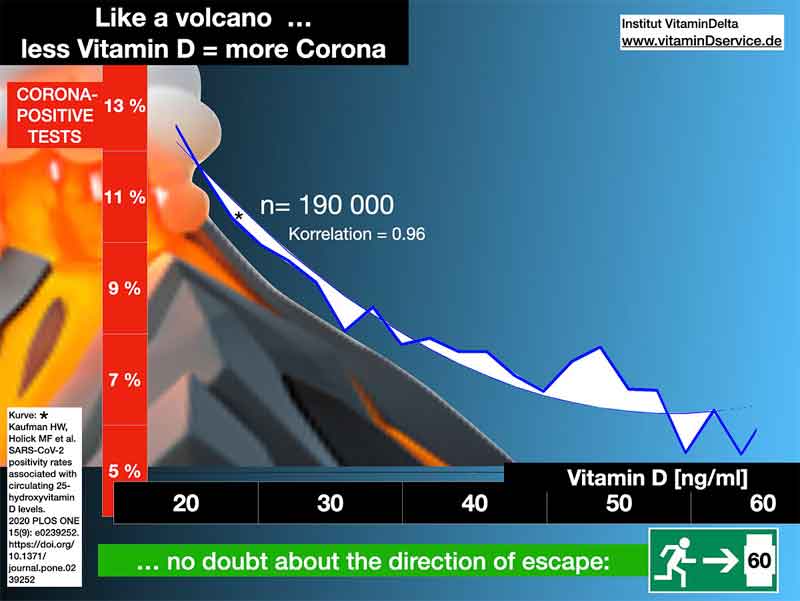
Based on vitamin D results from the preceding 12 months and SARS-CoV-2 test data from mid-March through mid-June 2020 from 191,779 patients from 50 U.S. states, people with a vitamin D level of at least 55 ng/mL (138 nmol/L) had a 47% lower SARS-CoV-2 positivity rate compared to those with a level below 20 ng/mL (50 nmol/L).2 As noted by the authors:
“The SARS-CoV-2 positivity rate was 9.3% and the mean seasonally adjusted 25(OH)D was 31.7 [ng/mL]. The SARS-CoV-2 positivity rate was higher in the 39,190 patients with ‘deficient’ 25(OH)D values (<20 ng/mL) (12.5% …) than in the 27,870 patients with ‘adequate’ values (30–34 ng/mL) (8.1% …) and the 12,321 patients with values ≥55 ng/mL (5.9% …) …3
The risk of SARS-CoV-2 positivity continued to decline until the serum levels reached 55 ng/mL. This finding is not surprising, given the established inverse relationship between risk of respiratory viral pathogens, including influenza, and 25(OH)D levels.4
SARS-CoV-2 positivity is strongly and inversely associated with circulating 25(OH)D levels, a relationship that persists across latitudes, races/ethnicities, both sexes, and age ranges. Our findings provide impetus to explore the role of vitamin D supplementation in reducing the risk for SARS-CoV-2 infection and COVID-19 disease.”5
The graph below, obtained from GrassrootsHealth,6 shows how the rate of positive SARS-CoV-2 results declines as vitamin D levels go up. Again, as you increase your vitamin D level from 20 ng/mL to 55 ng/mL, your risk of having a positive SARS-CoV-2 test result decreases by 47%.
Even after adjustment for gender, age, ethnicity and latitude, the risk of having a positive test result was 43% lower among those with a vitamin D level of 55 ng/mL compared to those with a level of 20 ng/mL. I understand that the COVID-19 test may be worthless and counterproductive with its false positives, but it is the only metric we currently have to assess interventions.
Vitamin D Lowers Infection and Hospitalization Rates
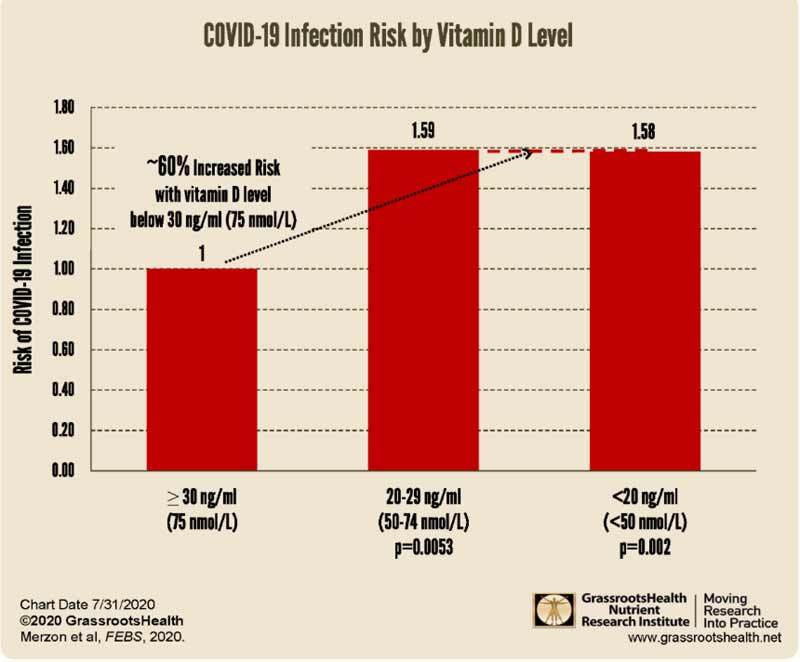
That higher vitamin D levels lower the risk of SARS-CoV-2 infection (i.e., getting a positive test result) was also confirmed in an Israeli population-based study7,8 published in July 2020. This paper examined data from 7,807people tested for SARS-CoV-2 infection between February 1 and April 30 of 2020 who also had vitamin D test data available.
Here, those with a vitamin D level above 30 ng/mL (75 nmol/L) had a 59% lower risk of testing positive for SARS-CoV-2 compared to those with a vitamin D level between 20 ng/mL and 29 ng/mL (50 to 74 nmol/L), and a 58% lower risk compared to those with a vitamin D level below 20 ng/mL (50 nmol/L). The graph below, from a GrassrootsHealth report,9 illustrates the findings.
Vitamin D Lowers Hospital and ICU Admissions
Seeing how higher vitamin D levels lowers your risk of testing positive for SARS-CoV-2 in the first place, it’s no surprise then that other data show higher vitamin D also lowers hospital and intensive care admissions.
The Israeli analysis10 above, for example, found that among individuals who tested positive for SARS-CoV-2 infection, those who had a vitamin D level below 30 ng/mL also had a 1.95 times (crude odds ratio) to 2.09 times (odds ratio after adjustment for demographics and psychiatric and somatic disorders) higher risk of being hospitalized for COVID-19.
In other words, having a vitamin D level below 30 ng/mL about doubled the risk of being hospitalized with COVID-19. Vitamin D, when administered to hospitalized patients, can also lower their risk of needing intensive care.
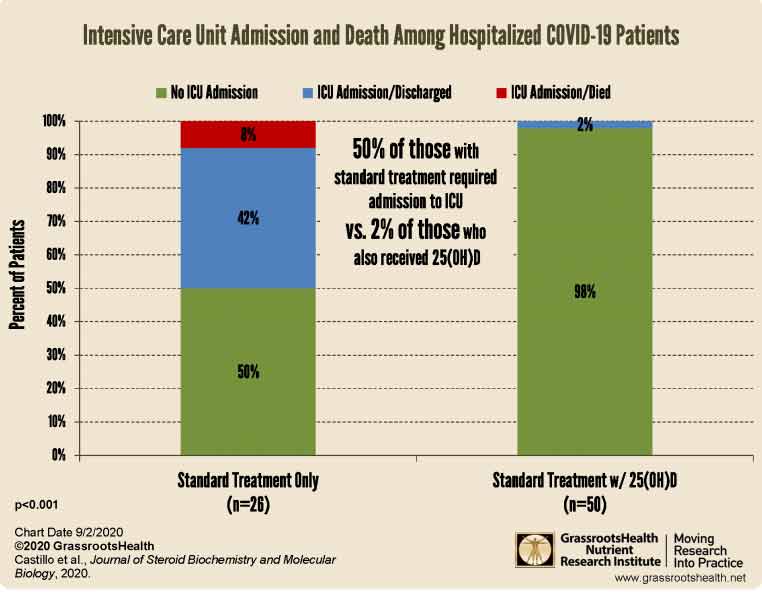
This was demonstrated by Spanish researchers in a small randomized clinical study11,12,13,14 published online August 29, 2020. They found hospitalized COVID-19 patients who were given supplemental calcifediol (a vitamin D3 analog also known as 25-hydroxycholecalciferol or 25-hydroxyvitamin D) in addition to standard of care — which included the use of hydroxychloroquine and azithromycin — had significantly lower intensive care unit admissions.
Patients in the vitamin D arm received 532 micrograms of calcifediol on the day of admission (equivalent to 106,400 IUs of vitamin D15) followed by 266 mcg on Days 3 and 7 (equivalent to 53,200 IUs16). After that, they received 266 mcg once a week until discharge, ICU admission or death.
Of those receiving calcifediol, only 2% required ICU admission, compared to 50% of those who did not get calcifediol. None of those given vitamin D supplementation died, whereas 7.6% in the standard care group perished.
Vitamin D Lowers COVID-19 Mortality
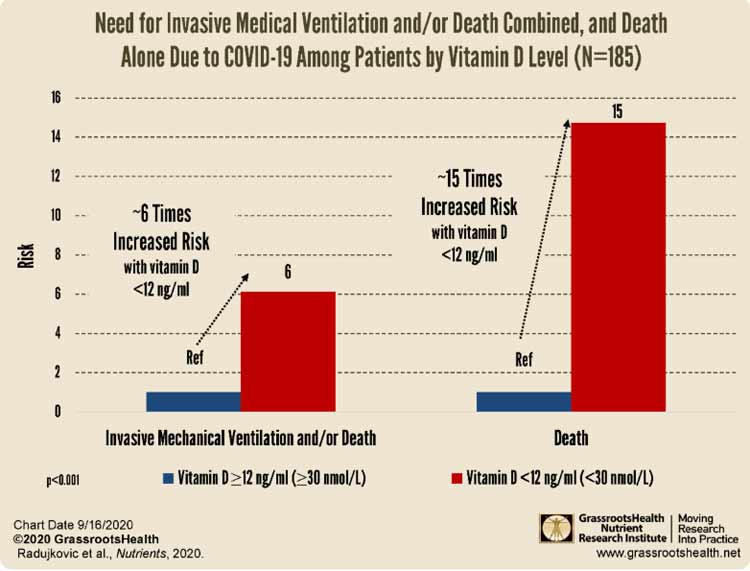
Other studies have also confirmed that higher vitamin D levels lower your risk of complications and death from COVID-19. Among them is an August 2020 study17,18 published in the journal Nutrients, which found patients who had a vitamin D level below 12 ng/mL (30 nmol/L) had a 6.12 times higher risk of severe disease requiring invasive mechanical ventilation, and a 14.7 times higher risk of death compared to those with a vitamin D level above 12 ng/mL.
An Iranian study19,20 published online in mid-July 2020 also found that patients with vitamin D levels above 30 ng/mL (75 nmol/L) had better clinical outcomes and a far lower risk of death. Among COVID-19 patients over the age of 40 who had vitamin D levels below 30 ng/mL, 20% died, compared to 9.7% of those with levels at or above 30 ng/mL. Among those with a vitamin D level of at least 40 ng/mL, only 6.3% died.
Low Vitamin D Is a Risk Factor for Respiratory Failure
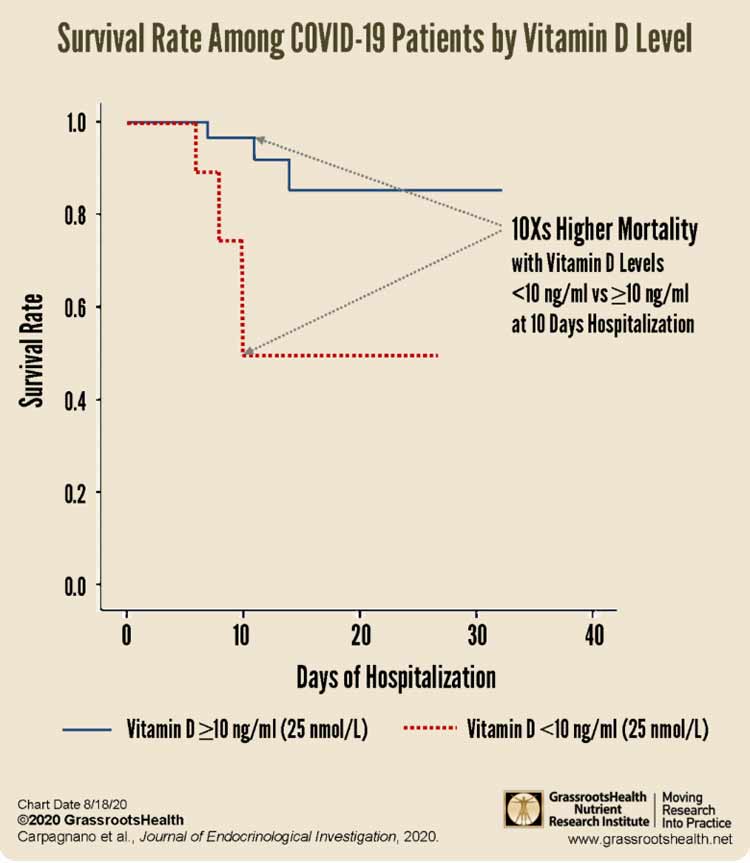
Yet another study, published in the Journal of Endocrinological Investigation in August 2020, found vitamin D deficiency was a common factor among hospitalized patients in Italy who had been diagnosed with COVID-19 related respiratory failure.
As reported by GrassrootsHealth:21
“Vitamin D levels were measured for each patient and were defined as insufficient (20-29 ng/ml or 50-74 nmol/L), moderately deficient (10-19 ng/ml (25-49 nmol/L), and severely deficient (<10 ng/ml or <25 nmol/L). A normal vitamin D level was defined as 30 ng/ml (75 nmol/L) or higher.
81% of the patients with acute respiratory failure due to COVID-19 had vitamin D levels below 30 ng/ml (75 nmol/L); and 24% had severe vitamin D deficiency (≤10 ng/ml or ≤25 nmol/L).
When looking at mortality rates after 10 days of hospitalization, it was found that those with severe vitamin D deficiency had a 50% probability of death, compared to 5% among those with a vitamin D level greater than 10 ng/ml (25 nmol/L).
This is a 10 times higher risk of death among patients with severe vitamin D deficiency compared to patients with vitamin D levels >10 ng/ml (>25 nmol/L) at 10 days of hospitalization.”
According to the study authors:
“Altogether, these considerations support the recommendation that people at risk of influenza and/or COVID-19 consider vitamin D supplementation to raise their 25(OH)D concentrations above 40-60 ng/mL, and that treatment of patients infected with influenza and/or COVID-19 includes higher vitamin D doses.”
How and Why Vitamin D Lowers COVID-19 Risks
In a past article, I reviewed how vitamin D lowers your risk of COVID-19 complications and death by inhibiting both cytokine22 and bradykinin storms.23 Vitamin D also:
Lowers viral replication24
Boosts your overall immune function by modulating both innate and adaptive immune responses
Reduces respiratory distress25
Improves overall lung function
Helps produce surfactants in your lungs that aid in fluid clearance26
Lowers your risk of comorbidities associated with poor COVID-19 prognosis, including obesity,27 Type 2 diabetes,28 high blood pressure29 and heart disease30
All of these factors make it an important component of COVID-19 prevention and treatment. As temperatures and humidity levels drop — two factors that influence the viability of SARS-CoV-2 in air and on surfaces — it’s quite likely we’ll see a reemergence as we move into fall and winter.
My #StopCOVIDCold campaign seeks to raise awareness about the importance of vitamin D optimization to prevent a resurgence of COVID-19 hospitalizations and deaths. The two reports, which you can download free of charge on the #StopCOVIDCold website, provide in-depth information about the biological mechanics behind vitamin D’s protective effects.
When the northern hemisphere heads into autumn, is the ideal time to check your vitamin D level and start taking action to raise it if you’re below 40 ng/mL (100 nmol/L). Experts recommend a vitamin D level between 40 and 60 ng/ml (100 to 150 nmol/L). An easy and cost-effective way of measuring your vitamin D level is to order GrassrootsHealth’s vitamin D testing kit.
Once you know your current vitamin D level, use the GrassrootsHealth vitamin D calculator31 to determine how much vitamin D you might need to reach your target level. To optimize vitamin D absorption and utilization, be sure to take your vitamin D with vitamin K2 and magnesium. The three work synergistically to manage calcium metabolism.32
Lastly, remember to retest in three to four months to make sure you’ve reached your target level. If you have, then you know you’re taking the correct dosage. If you’re still low (or have reached a level above 80 ng/mL), you’ll need to adjust your dosage accordingly and retest again in another three to four months.
Weighted blankets are underrated, with many people not realising the health perks.
Weighted blankets are used for children with autism spectrum disorder, but much more to these valuable bedding items. Weighted blankets have been scientifically proven to reduce stress and anxiety in adults and help reduce insomnia! So, if you’re having trouble sleeping or find yourself overly stressed at work or home, a weighted blanket might be the solution you’re looking for.
1 – Weighted blankets improve sleep.
A weighted blanket is designed to increase serotonin and melatonin levels in your body, allowing you to fall asleep faster and stay asleep longer. Serotonin and melatonin relax the body, so if you’ve been tossing and turning all night long, a weighted blanket may be the easy fix you need.
2 – Weighted blankets improve your mood and decrease anxiety.
Weighted blankets help to regulate cortisol levels in the body, which reduces feelings of stress and anxiety. The pressure from these blankets also improves sleep quality by regulating breathing patterns and heart rate. So when you’re feeling anxious throughout the day, take a nap with your weighted blanket to reduce feelings of stress significantly.
3 – Weighted blankets give you more energy throughout the day.
Weighted blankets increase serotonin, dopamine, and endorphin levels in the brain, providing a natural boost to your energy levels. So instead of relying on caffeine or sugary snacks for energy boosts, turn to your weighted blanket. A few minutes under this blanket can improve your mood and give you the energy boost you need each day.
4 – Weighted blankets help with weight loss.
Weighted blankets work by putting pressure on the body, but they also cause a release in serotonin in the brain, a well-known appetite suppressant. In addition, weighted blankets can improve sleep, which helps lower cortisol levels and boost metabolism. All these factors contribute to losing weight more quickly!
5 – Weighted blankets are used for children with an autism spectrum disorder.
Weighted blankets have proven themselves to be an effective treatment for children who have been diagnosed with an autism spectrum disorder. The pressure of these blankets is known to calm anxious children and can significantly reduce outbursts. If your child experiences sensory overload, a weighted blanket may be the key to calming them down. Weighted blankets are also an effective way of increasing sleep time with autistic children, who typically have trouble sleeping through the night.
Children with autism experience heightened senses, best weighted blanket are an effective way to calm them down. This allows their minds to relax, and they can finally get the rest that they need. You may have seen weighted blankets before but probably not realised what they were for! These valuable gems are easy to use and provide so many health benefits. So if you’re looking for a way to sleep better, reduce stress or anxiety, and give yourself a natural energy boost, then a weighted blanket is the solution you’ve been looking for! Not only are these blankets great for adults, but children with autism have shown impressive results when using them.
The best weighted blanket isn’t just beneficial to those who suffer from various disorders and those who suffer from sleeping problems. So, if you’re having trouble sleeping at night, it may be time to invest in a weighted blanket.
We independently selected these products because we love them, and we hope you do too. Shop with E! has affiliate relationships, so we may get a commission if you purchase something through our links. Items are sold by the retailer, not E!.
Last week’s episode of The Bacheloretteended on a dramatic note (as per usual). This week, Michelle Young brought the guys to her home state, Minnesota. She had a solo date with Joe Coleman, visiting some of her favorite places. She introduced Nayte Olukoya to two of her close friends on their boating date. The rest of the guys participated in Viking challenges at a football stadium for a group date.
Each week, we get to see more strong connections form as Michelle’s decisions get tougher to make. And, obviously, we cannot forget about the fashions. Michelle, Tayshia Adams, and Kaitlyn Bristowe have been blessing our televisions with some great looks. We pressed pause, took screenshots, and did the research to find the outfits from this week’s episode so you don’t have to.
Keep on scrolling to see some rose-worthy styles from , , , Amazon, ,, MyTheresa, , ,, , and.
24. This 1989 classic set off what is widely known as the Disney Renaissance. On the heels of Oliver & Company, The Black Cauldron and several live-action films in the Herbie franchise, the success of Ariel and co. was followed by extremely well-received ’90s fare: Beauty and the Beast, Aladdin, The Lion King, Toy Story…
25. Give the opening scene with King Triton a rewatch: Eagle-eyed viewers (or, you know, those of us with the ability to press pause) can spot Mickey Mouse, Goofy and Donald Duck in the underwater crowd, continuing the studio’s popular tradition of giving nods to other members of its vast oeuvre.
26. Color was key for the ocean-set picture. According to the official Walt Disney Company blog, Ariel’s red locks were chosen to help differentiate her from Daryl Hannah‘s blonde mermaid in 1994’s Splash and to complement the blue-green of her fin, a hue specially mixed by the Disney paint lab and named Ariel.
27. As for her facial features, those were inspired by then-Who’s the Boss? star Alyssa Milano. “I didn’t know that when it was going on,” the actress told Wendy Williams in 2013. “But they asked me to host The Making of The Little Mermaid and it came there that the drawing and likeness of The Little Mermaid was based on pictures of me from when I was younger, which is so cool!”